Friday, May 28, 2010

Remembering Dorothy Height

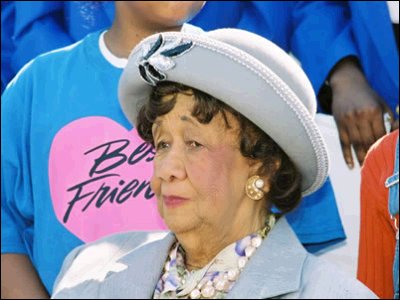
Last month, a renowned civil rights leader passed away. Dorothy Height (1912-2010) was an African-American educator, social worker, and social activist. She died at the age of 98.
On April 20, 2010, the nation lost one of the foremost leaders of the Civil Rights Movement and the social work profession—Dr. Dorothy I. Height. Dr. Height was a renowned civil rights leader and a vital force in the struggle for human rights and equality in the United States for more than half a century. Her tireless efforts on behalf of others exemplified the social work commitment to social justice and advocacy. In 2009, the Dorothy I. Height and Whitney M. Young, Jr. Social Work Reinvestment Act—the most comprehensive piece of federal legislation addressing social work workforce challenges—was introduced into Congress. Dr. Height is the recipient of NASW’s 2009 Lifetime Achievement Award, and her legacy was celebrated in April by the social work profession during the 2010 Social Work Congress.

The NASW President also wrote a tribute that celebrates her achievements. You can learn more about her life by watching this video.

Wednesday, May 26, 2010

NACS: Students Still Like Printed Textbooks

This news does not surprise me at all. In fact, I am one of those students who still prefers printed textbooks.
Many experts are predicting that students are about to embrace e-books as a preferred form of textbooks. But a newly released survey from the National Association of College Stores -- conducted last fall, before the arrival of the iPad -- suggests that the shift had not happened by that point. Rather it found that 74 percent of students preferred printed textbooks and that a slight majority wouldn't consider a digital version. The survey is based on data from 19 campuses nationwide

When I began graduate school, the transition hit me hard. I only graduated a few years ago, yet most of my classes were doing away with coursepacks and printed textbooks. If I wanted to access required articles, I had to download and print them. When it comes to nonfiction, I always prefer the printed version. I cannot read something from a screen. I like to turn pages and mark notes on the margins. It takes time for a new innovation to become ingrained in the college culture. More importantly, students are unlikely to change when the old system works without problems.

Wednesday, May 12, 2010

Freep: Woman Proves College Is Possible for Foster Kids

Last week, this story was published in the Detroit Free Press.
Cherish Thomas, 22, born to a drug-addicted prostitute, was in 20 foster homes before attending the University of Michigan, where she earned a degree in sociology and African-American studies. Now a graduate student there, she plans to tell her story today to more than 100 foster care youths at "Rising Above the Odds Against Me," a conference at Oakland University designed to help steer them toward college.

Although I do not personally know Cherish, I admire her tenacity and confidence to overcome tremendous childhood struggles. While she could have been another foster care statistic, she is now pursuing her Master of Social Work (MSW) at the University of Michigan.

Here is another inspirational story of grads across Michigan:
How Grads Defied Odds to Earn Degrees, Excel

These stories should remind all of us that people can excel if they believe in themselves.